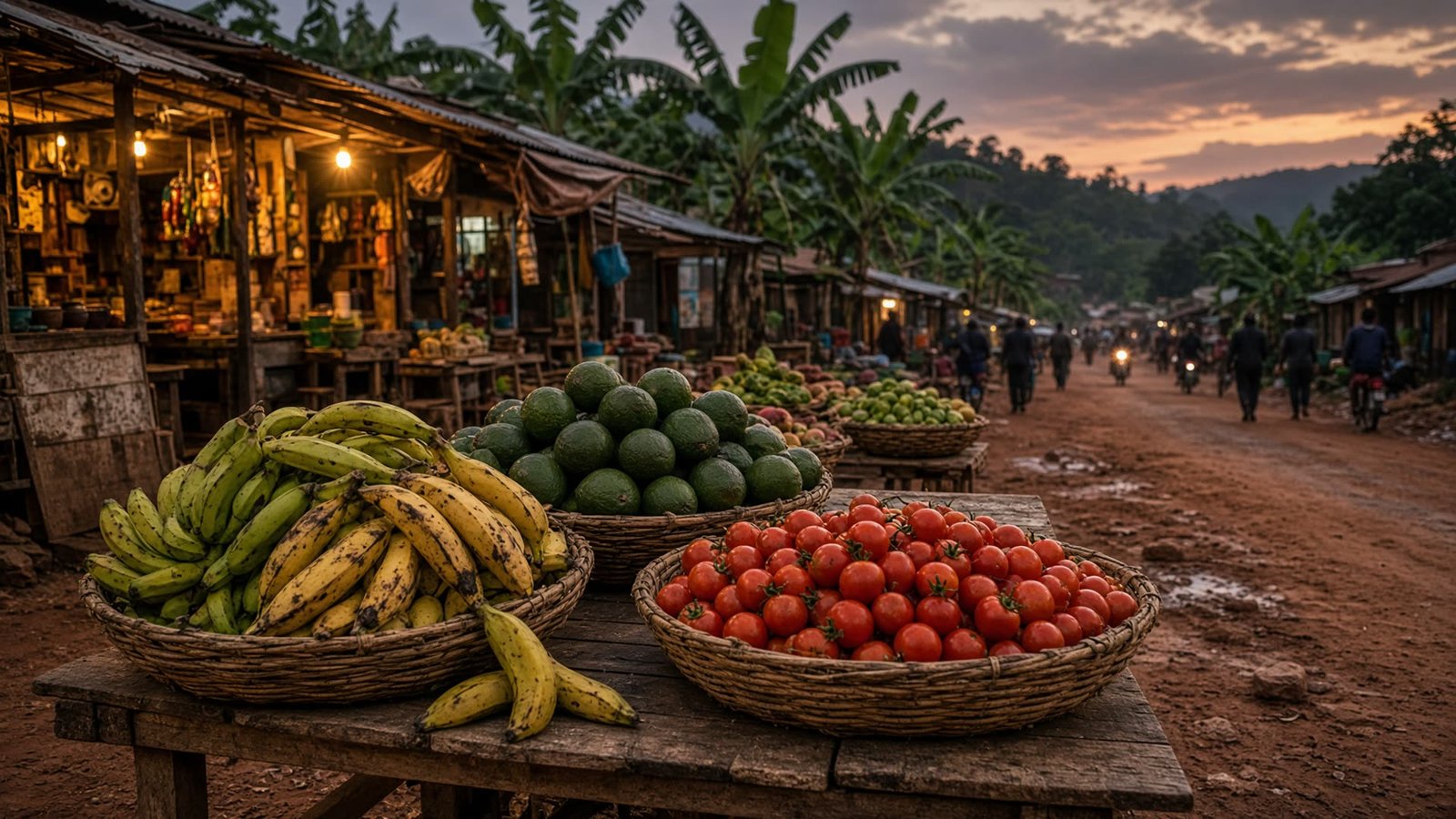
In 2000 the Nalubega family lost their father. Relatives pressed for the older girls to marry at fifteen and thirteen. Their mother refused. The household became a church household — morning mass at Santa Agnes Catholic Parish — and a trading household. Baskets of bananas, avocados and tomatoes went up on heads, then down on a table by the road.
Fausta still names that season plainly: she calls herself a street girl, because the family lived by the street for over ten years. At night in grasshopper season they would leave the day’s takings in a corner and run to catch nsenene. A mother would wake past midnight and walk the road looking for her daughters.
A parish priest, Father Dominique Maebe, found a girl who should have been in class and was not. He asked for her mother. He paid school fees from Primary Six. That single act is the seed of every school fee Mercy For Life Africa pays now.
In 2013, in her second year at university, Fausta registered the work. She had a job with a government institute under the Ministry of Water, based in Wakiso, and she sent the largest share of her salary down into the ghetto — food, soap, whatever the week required. She posted the work. A man named Dennis O’Donovan, now at rest, began sending one hundred dollars a month and said: what you are doing is what God tells us to do.
The organisation was first called Restoration Image. When a church family in Idaho — through long-term partner Ross Hoffman, who later built the head office — stood with the work, the names became one: Mercy For Life. The One Together family now sponsors almost all the children in the programme.